
If you’ve ever rented or bought a trailer-mounted generator, you’ve probably stared at the specs, noticed a bunch of vague noise labels like “silent” or “low-noise,” and thought, “Wait, what does that actually mean? Because my neighbor’s lawn mower is way quieter than my old generator, and that thing was supposed to be ‘silent.’” As a supplier of trailer generator sets—specifically models like our Mobile Trailer Mounted Generator—I get that confusion all the time. The truth is, “silent” isn’t a universal number, and decibels (dB, that’s the unit for sound) are trickier than they look. Let’s break it down, no confusing engineering jargon, just real stuff that matters when you’re hauling a generator to a job site, a campsite, or a construction zone.
First, let’s get one basic rule straight: decibels aren’t linear. If one thing is 10 dB louder than another, it sounds twice as loud to the human ear. That’s a big deal because a lot of suppliers will round numbers or skew specs to make their units sound better. For example, a normal conversation is about 60 dB, a busy restaurant hits 70 dB, and a vacuum cleaner is roughly 75 dB. If a generator is advertised as “silent,” most people assume it’s quieter than a conversation, right? But that’s not always the case with trailer-mounted models, because these aren’t tiny portable generators you can carry around. A trailer generator set needs to hold enough fuel to run for 10+ hours, power heavy equipment, and be easy to move across jobsites. That means the engine is bigger, so noise is harder to muffle without bulking up the trailer (which kills the whole “mobile” point).
So, what’s the actual noise level of a silent trailer generator set? Let’s start with the average for “low-noise” trailer generators—most are between 60 and 75 dB, measured at 7 meters (about 23 feet) away from the unit, which is the industry standard for fair testing. Why 7 meters? That’s the distance most people stand when they’re working around or next to a generator, not right on top of it (and right on top, a generator will be 90+ dB, which is loud enough to damage your hearing over time). Now, the “silent” label is a bit of a marketing term—EPA and OSHA don’t have an official definition for “silent” generators, so manufacturers use it loosely. Our Mobile Trailer Mounted Generator, for example, clocks in at 62 dB at 7 meters when idling and 68 dB at full load. Let’s put that in perspective: 62 dB is basically the hum of a library or a quiet bedroom at night, and 68 dB is the noise of a normal conversation across a small room. That’s way quieter than a standard open-frame trailer generator, which usually hits 85 dB at 7 meters or more—loud enough that you’d need earplugs just to stand next to it for more than a few minutes.
Wait, but why is there a range? What makes one silent trailer generator quieter than another? Let’s talk about the design choices that make a difference. First, the enclosure (that soundproof box around the engine and generator) is key. Our models use thick, rubber-lined steel enclosures with acoustic foam inside that absorbs high-frequency engine noise, not just blocks it. Open-frame generators don’t have that enclosure, so noise just escapes through the gaps—no wonder they’re loud. Then there’s the exhaust system: a lot of cheap silent generators use a simple muffler that doesn’t muffle low-frequency rumble, which is the part of the noise that makes your chest vibrate. We add two-stage exhaust mufflers and even a resonating chamber to cancel out that low rumble, which is the biggest contributor to that “annoying generator hum” you hate. Also, the engine mount: if the engine is bolted directly to the trailer frame, it vibrates the whole trailer, making more noise. We use rubber isolators that stop that vibration from transferring, so the whole unit doesn’t shake and buzz while it’s running.
But here’s the catch: noise level isn’t just about the generator itself. It depends on a few other things too, and a lot of people get this wrong. First, distance: if you stand 1 meter (3 feet) away from our silent trailer generator, it’ll be around 75 dB—same as a vacuum cleaner. If you stand 15 meters (50 feet) away, it drops to like 55 dB, which is quieter than a ticking clock. That’s why testing at 7 meters is so important—anyone who gives you a number at 1 meter is lying. Second, load: a generator running at full power is always louder than at idle. Our 62 dB idle jumps to 68 dB at full load, which is still manageable, but a cheap generator might jump 10 dB or more between idle and full load, which is a big difference. Third, terrain and environment: if you set your generator on grass or dirt, it absorbs some noise. Set it on concrete or asphalt, and the sound bounces, making it sound 5-10 dB louder than it actually is. Also, wind: wind can carry generator noise farther, so if you’re near a residential area, running it with the wind blowing toward houses is worse than running it with the wind at your back.
I’ve seen way too many customers get frustrated because they bought a “silent” trailer generator, unloaded it, and thought it was way louder than expected. A few months back, a construction manager reached out to me saying his “silent” generator was so loud that the nearby coffee shop complained, and he had to pay a fine. When I checked his specs, it was advertised as “silent” but actually hit 80 dB at 7 meters—about as loud as a busy street. That’s why it’s important to ask for the actual dB number, not just the marketing label, and ask for it at the industry-standard 7 meters. Our Mobile Trailer Mounted Generator’s specs are all tested at that distance, so you know exactly what you’re getting.
Another thing to consider: regulations. If you’re using your generator in a residential area, a national park, or a city with noise ordinances, there’s almost always a limit. Most residential noise ordinances limit commercial generators to 60-70 dB during the day and 50-60 dB at night. Our silent trailer generator falls right in that sweet spot—62 dB at idle is perfect for overnight power at a campsite or a tailgate, and 68 dB at full load works for construction sites near residential areas without violating noise rules. I once had a customer who used our generator for a pop-up concert in a residential neighborhood; the only complaint was from a guy who thought it was too quiet because he couldn’t hear it from his porch, which is the exact reaction you want.
Now, let’s bust a common myth: a lot of people think bigger generators are always louder. That’s not true—our 50kW silent trailer generator is 68 dB at full load, and a smaller 20kW open-frame trailer generator is 82 dB at the same load. The difference is the enclosure and the soundproofing, not the size of the engine. So if you need a big generator for powering multiple tools or an RV, you don’t have to put up with deafening noise—silent models are designed to handle that without the racket.
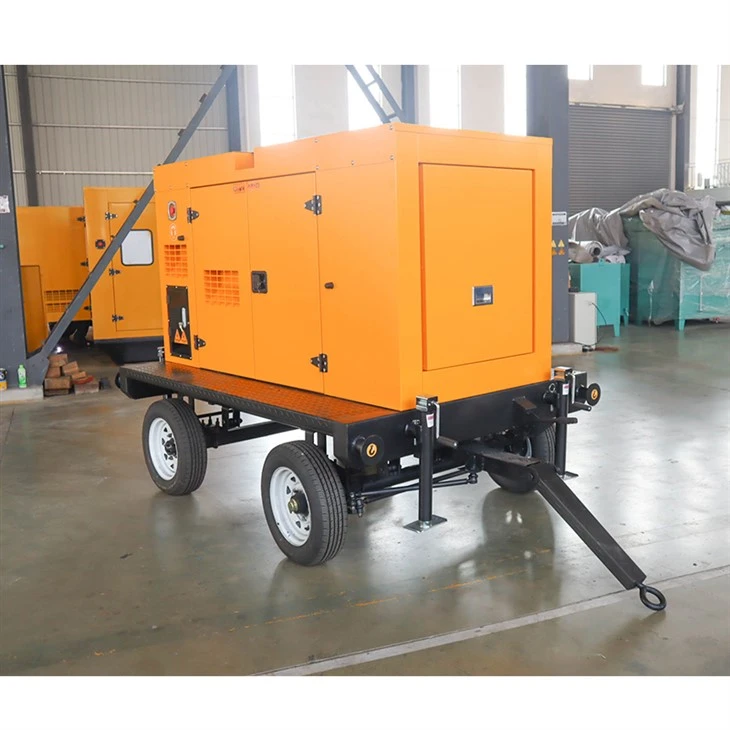
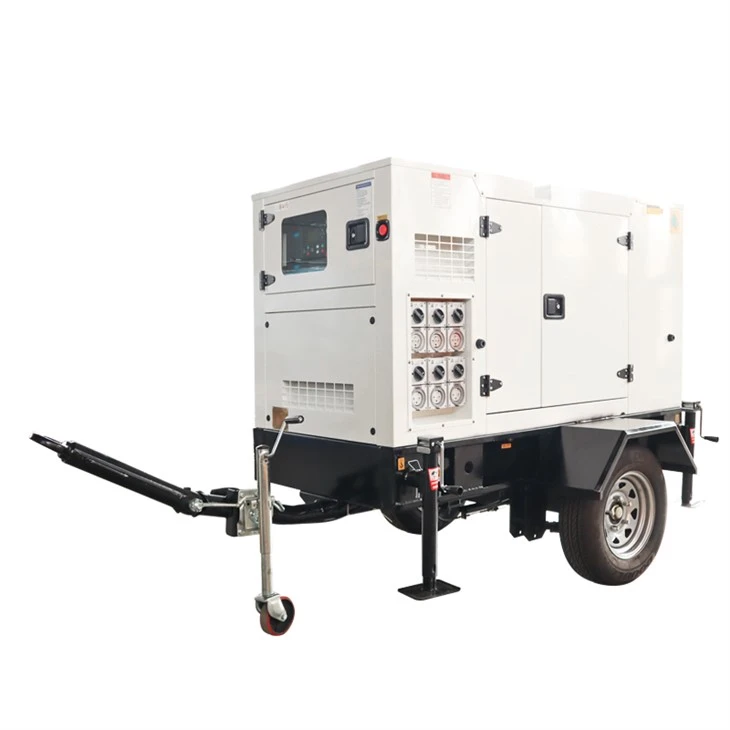
If you’re in the market for a trailer generator set, don’t just take the “silent” label at face value. Ask for the tested decibel level at 7 meters, compare that to other models, and think about where you’re going to use it. If you’re hauling it to remote job sites where no one cares about noise, a cheaper open-frame model might work, but if you’re working near homes, parks, or events, a silent trailer generator is worth the extra cost. Our Mobile Trailer Mounted Generator is built for exactly that balance: it’s powerful enough to run heavy equipment, easy to tow, and quiet enough to follow most noise rules.
At the end of the day, “silent” is relative, but when it comes to trailer generator sets, you don’t have to guess. The actual decibel levels make all the difference between a unit that’s useful and one that’s a nuisance. If you’re not sure which model is right for your needs, feel free to reach out—we can walk you through the specs, answer any questions about noise levels, or even help you figure out the right size for your project. No salesy pressure, just real info about what works.
References
- U.S. Environmental Protection Agency (EPA). (2022). Generator Noise Emissions and Best Practices for Mitigation. Retrieved from epa.gov
- Occupational Safety and Health Administration (OSHA). (2021). Noise Exposure Standards and Hearing Conservation. Retrieved from osha.gov
- International Organization for Standardization (ISO). (2019). Acoustics – Measurement of noise from stationary sources – Engineering method and survey method. ISO 3744:2019.
- Generator Industry Association. (2023). Trailer-Mounted Generator Noise Specifications: A Buyer’s Guide. Retrieved from generatorassociation.org


