
If you’ve ever been in a commercial building that experiences an unexpected power outage — say, on a sweltering summer afternoon when the AC kicks out, or during a critical server maintenance window — you know how stressful even a 10-minute disruption can be. For businesses, hospitals, and industrial facilities, that stress isn’t just an inconvenience: it’s a threat to operations, safety, and revenue. That’s where a 160A ATS Control Cabinet comes in, and as a supplier of these systems, I get asked all the time: how does it actually work?
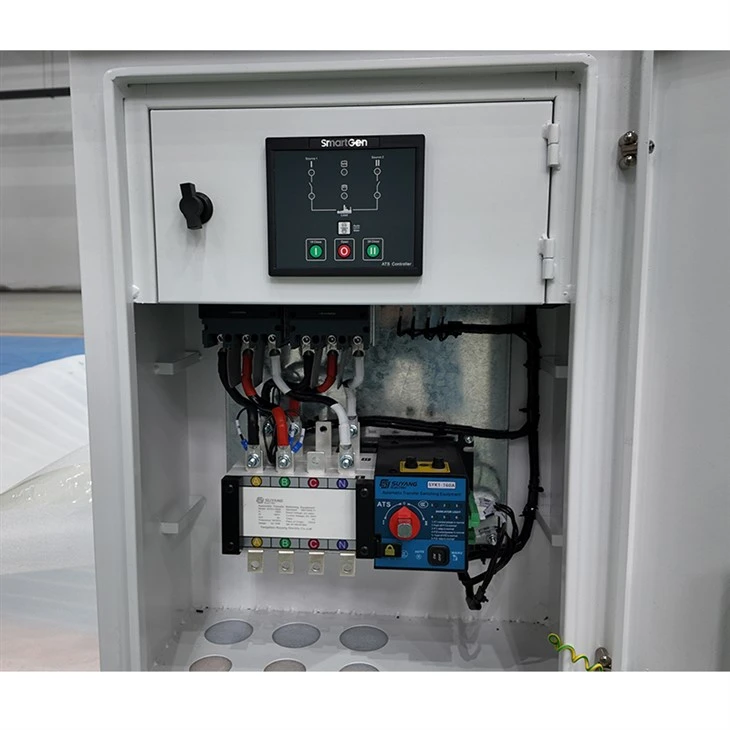
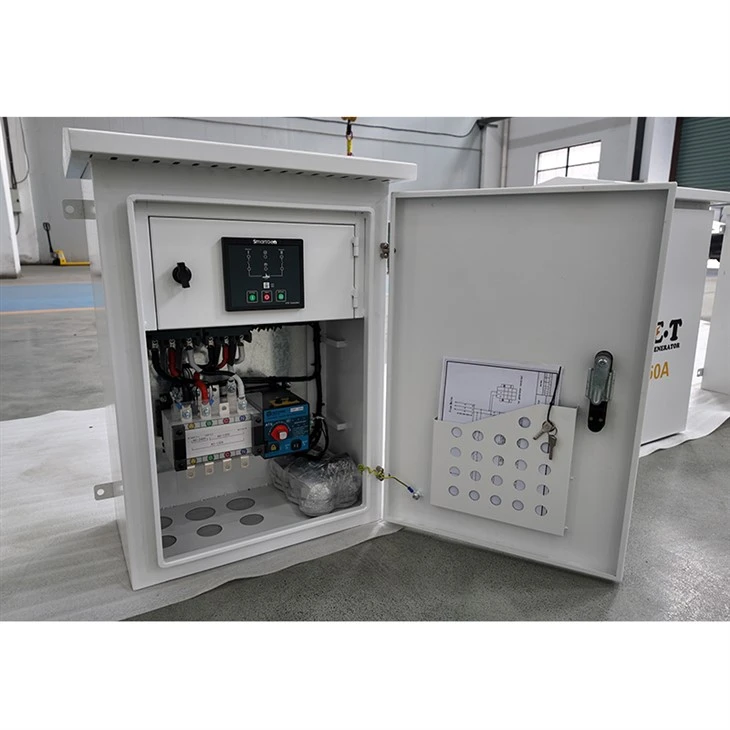
Before we dive into the mechanics, let’s define what an ATS is, for anyone who might be new to this space. ATS stands for Automatic Transfer Switch, and a 160A ATS Control Cabinet is the enclosure that houses the switch, its control circuitry, protection devices, and monitoring components — all calibrated to handle a maximum current of 160 amps. That 160A rating isn’t arbitrary: it’s designed for mid-sized applications, from small commercial kitchens and retail stores to remote work sites and auxiliary power for small manufacturing lines, where the load needs a reliable backup power switch without overkill from higher-amperage systems.
At its core, the cabinet’s job is straightforward: when the main grid power fails, it automatically transfers the connected load from the grid to a backup generator, and when grid power is restored, it switches back — all without manual intervention, often in as little as 10 seconds. But the science behind that simple-sounding process is layered, and every component plays a critical role. Let’s walk through it step by step, like I’d explain it to a customer who’s seen our 160A ATS Control Cabinet and wants to know why it’s different from the cheap, off-the-shelf units you might find at a big-box hardware store.
First, the input and protection layer. Every 160A ATS Control Cabinet has two primary power inputs: one for the utility grid, and one for the backup generator. Before power even reaches the transfer switch, it passes through a set of circuit breakers rated for exactly 160A. These aren’t standard household breakers; they’re molded case circuit breakers (MCCBs) calibrated to trip if the current exceeds 160 amps — a safety feature that prevents overheating, wire damage, or even electrical fires. For example, if a commercial space has a 150A grid load and a sudden surge from a faulty appliance pushes current to 170A, the MCCB will trip before that power ever reaches the switch, protecting both the ATS and the connected equipment.
Next, the control module. This is the brain of the cabinet, and it’s what makes the system “automatic,” not just a manual switch. Most quality 160A ATS Control Cabinets use a programmable logic controller (PLC) or a dedicated ATS controller, not a basic relay-based system. The controller is wired to sensors that monitor three key parameters of the grid power: voltage, frequency, and phase balance. Grid power is standard 120/240V AC in North America, with a frequency of 60Hz; if the voltage drops below a preset threshold (usually around 105V) or spikes above 130V, or the frequency strays outside 59-61Hz, the controller detects a fault. That’s when it triggers the transfer sequence.
I’ve seen too many budget cabinets skip this nuance, using a simple voltage sensor that only checks if power is present, not if it’s stable. If a grid dip is temporary — say, a neighbor’s AC kicks on for 2 seconds — a basic sensor might trigger an unnecessary transfer, which would shut down operations unnecessarily. Our 160A ATS Control Cabinet has adjustable delay timers built into the controller: we set the default transfer delay to 10 seconds, which means it won’t react to blips, only to actual sustained outages. That’s a small detail, but it’s saved hundreds of our clients from unplanned downtime.
Once the controller confirms a grid outage, it sends a signal to the generator’s start module. Here’s another key step that people often miss: the ATS doesn’t just switch power instantly between two sources. First, it tells the generator to start, waits a few seconds for the generator to warm up and reach stable voltage and frequency, then initiates the transfer. For a 160A system, this sequence is calibrated specifically for the size of backup generators that pair with it — usually 10kW to 20kW units, which are ideal for 160A loads. The transfer itself is a soft, synchronized switch, not a hard cut. Modern ATS switches use a “make-before-break” design, meaning the backup power connects to the load a fraction of a second before the grid disconnects. That eliminates the chance of a gap in power, even for sensitive equipment like computer servers or medical devices that can crash if power cuts out.
When grid power is restored, the controller doesn’t immediately switch back. It runs a check on the grid for a few minutes to make sure the power is stable this time — no more blips. Once it confirms reliable grid power, it initiates the reverse transfer, switching the load back to the grid, then sends a stop signal to the generator. The generator will keep running for an extra 2-5 minutes (adjustable) to cool down before shutting off, which extends the generator’s lifespan by preventing wear from hot shutdowns. That’s another feature we prioritize in our 160A ATS Control Cabinet: we’ve designed the control module to mimic best practices from generator manufacturers, so the two systems work in sync instead of fighting each other.
Now, let’s talk about protection features beyond the circuit breakers. A 160A ATS cabinet has built-in ground fault protection, for example, which detects any unintended current leakage to the ground — a common hazard in commercial spaces with lots of electrical equipment. If a ground fault is detected on either the grid or generator side, the ATS will immediately trip the breakers and shut off power, preventing electrocution or equipment damage. We also add surge protection devices (SPDs) to the cabinet, which absorb voltage spikes from lightning or utility switching, protecting both the ATS and the connected load from damage that could happen even during stable power periods.
Monitoring is another big part of how these cabinets work, especially for businesses that need to track power reliability. Many modern 160A ATS Control Cabinets have remote monitoring capabilities, either via a cellular connection or a local network. That means you can get an alert on your phone or computer if the ATS has triggered a transfer, how long the outage lasted, and even get diagnostics if there’s a fault with the cabinet or generator. For example, if the generator fails to start during an outage, the controller will log that error, so you can troubleshoot it before the next outage. As a supplier, we’ve had clients use this feature to catch a faulty generator spark plug before it left them in the dark during a storm.
I should also address a common misconception: a 160A ATS Control Cabinet isn’t just a switch — it’s an integrated system. You can’t slap any 160A switch into a generic enclosure and call it an ATS cabinet. The wiring, the placement of components, the calibration of the control module, and even the size of the enclosure itself matter. A proper 160A cabinet needs enough space for airflow, so components don’t overheat, especially during extended generator runs. It also needs to be NEMA-rated for the environment it’s going in: NEMA 1 for indoor use, NEMA 3R for outdoor use, to protect against rain and dust. Our 160A ATS Control Cabinet is available in both ratings, tailored to where it’ll be installed — something generic suppliers often don’t offer, leading to cabinets that fail prematurely.
Let me share a quick real-world example to put this into context. Last year, we worked with a small retail bakery that had a recurring problem: when the main grid would go out, their old manual ATS would take too long to switch power, and their walk-in cooler would warm up, ruining thousands of dollars of inventory. They tried a budget 160A ATS cabinet from a big online retailer that cost half as much as ours, but it would trigger false transfers from tiny grid dips, and when the actual outage came, it took 20 seconds to switch — enough to drop the cooler temperature 10 degrees, leading to a full restock. We swapped it out for our 160A ATS Control Cabinet, calibrated the delay timer to 10 seconds, and paired it with their 15kW generator. Since the install, they’ve had three outages, and every time the cabinet transferred in 8 seconds, no inventory was lost, and they got a text alert right away. That’s the difference between a quality, purpose-built cabinet and a cheap alternative.
If you’re at the point where you’re researching a 160A ATS Control Cabinet for your facility, don’t just look at the amp rating and the price. Ask about the control module’s delay settings, the protection features, the environmental rating, and whether it’s designed to work with mid-sized backup generators like yours. The right system won’t just “work” during an outage — it’ll work reliably, consistently, and without causing more problems than it solves.
Whether you’re a facility manager for a small office, a restaurant owner, or a contractor specifying power systems for a remote work site, a 160A ATS Control Cabinet is a critical investment in operational continuity. At the end of the day, the technology behind it is designed to do one simple job: keep your power on when it matters most, without you having to lift a finger.
If you’re ready to find out how our 160A ATS Control Cabinet can fit your power needs, or you have questions about installation, compatibility, or customization, we’d be happy to walk through your requirements and help you make the right choice.
References
- National Electrical Manufacturers Association (NEMA). NEMA Standard for Transfer Switches, 2021.
- Underwriters Laboratories (UL). UL 1008 Standard for Transfer Switches and Transfer Switch Equipment, 2022.
- Cummins Inc. Backup Power Application Guide for Small Commercial Facilities, 2023.
- Schneider Electric. ATS Control Cabinet Design and Safety Guidelines, 2022.


