

When I get asked, “What’s the weight of a 20ft container generator?” I never just rattle off a number—because way too many people I talk to (either first-time generators buyers or guys who’ve been in the game a minute) assume it’s just a regular 20ft shipping container, plus a little extra for the diesel part. Spoiler: that’s way off. As a supplier of these units, I’ve hauled enough of them, listened to enough delivery horror stories, and adjusted our shipping plans enough to know there’s a lot more to this than basic addition. Let me break this down like I do for every customer who calls—no fancy jargon, just real talk based on what actually matters.
First, let’s start with the basics: a standard empty 20ft shipping container (the kind you’d use to move furniture overseas) weighs about 5,000 pounds. That’s your baseline steel box, right? No frills, just a sturdy frame. But a 20ft container generator isn’t a empty box—it’s a box stuffed with stuff that has actual heft: the generator engine, alternator, fuel tank, control panel, cooling system, sometimes a small tool compartment, and a few extra parts for rough handling. The brand, engine size, and output are the big variables here. A tiny 20ft unit that only puts out 20kW? It’ll come in around 8,000 pounds. But if you’re looking for something that can power a small warehouse or a construction site with a bunch of tools? You’re talking way more than that.
I work with all kinds of clients, from event planners who need backup power for a festival to farm owners who need to keep their irrigation running during grid outages. One of the most common questions we get is about mid-range units, and that’s where the weight range gets tricky. Most 20ft container generators that fall into the 100kW to 350kW range usually tip the scales between 12,000 and 18,000 pounds. That’s not nothing—you can’t just rent a flatbed and pick one up with a standard pickup truck. But here’s the thing that trips people up: if you need more power than that, like, say, 500kW, you might think a bigger 40ft unit is the answer. Wait—no. We make a 500kW Container Diesel Generator that fits perfectly inside a standard 20ft frame. Why is that important? Because a 40ft unit is way harder to ship on narrow backroads or squeeze into a construction site. But that extra power doesn’t come light. Our 500kW 20ft container generator comes in at about 25,000 pounds total. Yeah, that’s a heavy unit—so we always tell customers they need a flatbed with a crane, not a regular delivery truck, to pick it up.
But here’s the thing I wish more people asked: “Does the weight matter for my needs?” Because it’s not just a trivia question for your delivery guy. Let’s be real—if you’re renting a generator for a month at a construction site that’s only accessible via a rutted dirt road, and you show up with a 20,000-pound unit, you might get stuck. We had a customer last year who tried to skip our advice and rent a local flatbed that could only handle 15,000 pounds. His 18,000-pound unit grounded the front axle, and he had to pay $2,000 to get it towed out, plus extra for a heavier flatbed. That’s why when someone calls and says, “I need a 20ft container generator for my site,” the first thing I ask is not “How much power do you need?”—it’s “Where is this going to sit? What’s the access like?” Because a 2,000-pound difference between a 16,000-pound unit and an 18,000-pound unit might sound small, but it’s the difference between fitting on your site and causing a huge headache.
Another big variable I see way too many people overlook: fuel capacity. A lot of customers don’t realize that the fuel tank inside the container is part of the total weight, and some people skip that for portability, but that’s a bad call if you don’t want to refuel every 8 hours. We offer two versions of our 20ft container generator: one with a 100-gallon fuel tank (that’s about 800 pounds when full) and a 200-gallon tank (1,600 pounds when full). So if you’re looking at a 15,000-pound base unit, adding a full 200 gallons jumps that to 16,600 pounds. And if you need to run it for days without stopping? You have to consider that you’re not going to drain the tank completely every time—extra diesel for emergencies adds more weight too.
Wait, let’s talk about empty vs. full weight, because that’s another common confusion. When we list the specs for a 20ft Container Generator, we always post two numbers: dry weight (no fuel, no oil, no coolant) and full load weight (with all fluids, ready to run). For example, our standard 250kW unit has a dry weight of 13,500 pounds and full load of 14,800 pounds. That difference is just the fluids—oil, coolant, diesel. It might not sound like a ton, but when you’re coordinating delivery, knowing that number is key because some shipping companies charge by weight, not just size. I’ve had customers get surprise bills because they only looked at the dry weight and forgot the fluids add a thousand pounds.
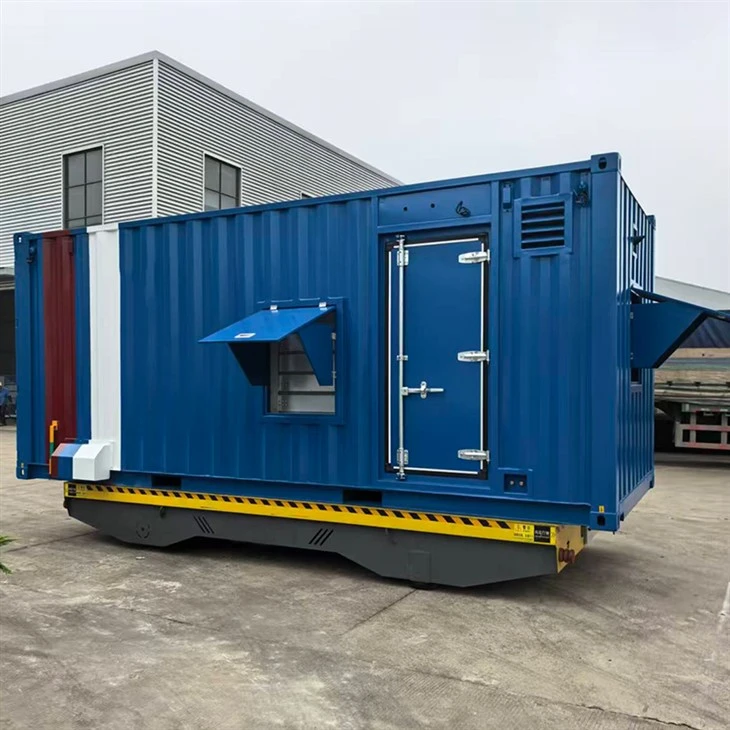
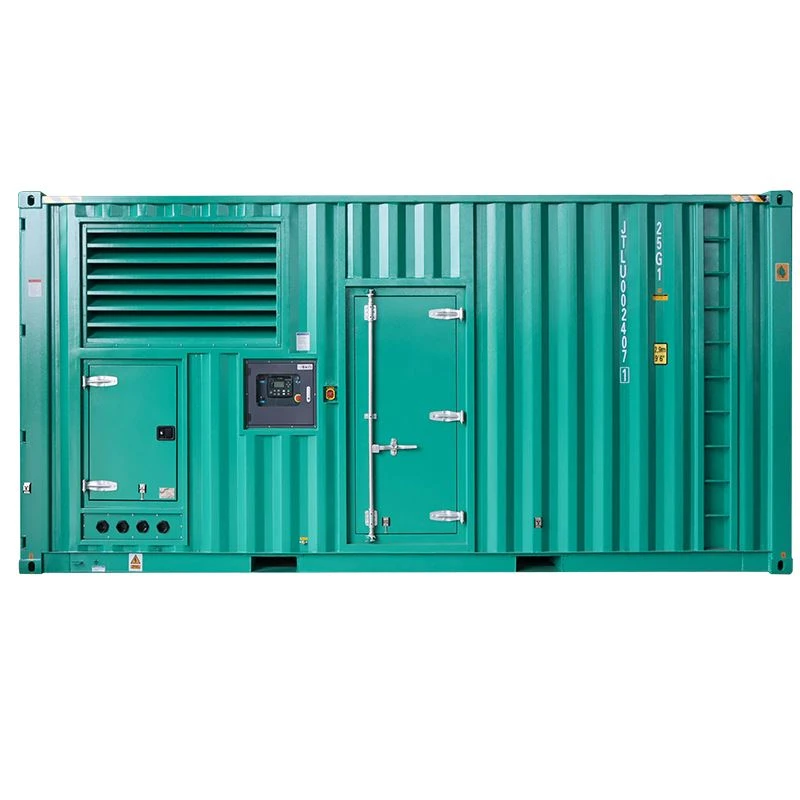
I also get asked about how the weight affects performance, and honestly, not much—if you buy a quality unit. But cheap knockoff units that some guys sell online? They use thinner steel for the container frame, smaller engines, and cut corners on the frame to save weight. Those units might be a thousand pounds lighter, but they’re way less durable. Last year, a customer bought a knockoff 20ft container generator from a random seller on the internet for $5,000 less than our price. When it arrived, the frame bent during unloading because it was too flimsy, and the generator broke down after two weeks of use. The “lightweight” trick only works for the seller, not for you. Our units are built with industrial-grade steel that’s tested to handle the weight of the engine and all the components, plus rough shipping and site conditions.
Let’s circle back to that 500kW unit I mentioned earlier. When people see that, their first thought is, “That has to be a 40ft container,” but no—we designed it to fit inside a standard 20ft frame because a lot of our clients need power in tight spaces. For example, data centers that have generator rooms that can’t fit a 40ft unit, or retail parks that need backup power for a bunch of stores but have limited space. The 500kW containerized unit is perfect for that, but its weight is a big reason we make sure to warn customers in advance about the delivery requirements. You can’t just back a truck up to a narrow alley and drop a 25,000-pound unit—you need a crane operator who knows how to lift that kind of weight without damaging the container or surrounding property.
I’ve also learned over the years that a lot of first-time buyers don’t realize that the weight of the unit impacts the foundation they need. If you’re putting a 16,000-pound unit on a temporary concrete pad, that pad has to be rated for that weight. A lot of people just pour a quick slab and end up with cracks or uneven settling, which can mess up the generator’s alignment and cause it to run poorly. We’ve had customers call us a month after installation saying their generator is making a weird noise, and when we send a tech out, it’s because the slab couldn’t handle the weight. That’s why we include a free site assessment for every customer who buys a 20ft container generator—we check the access, the foundation, the power needs, and even the nearest fueling station so there are no surprises.
Wait, let’s get back to the original question: what is the weight of a 20ft container generator? The short answer is, it depends, but that’s not a cop-out. For most common uses (small businesses, construction sites up to 300kW), you’re looking at 10,000 to 18,000 pounds. For mid-range power (300kW to 450kW), that jumps to 18,000 to 22,000 pounds. And for high-power needs like our 500kW Container Diesel Generator, it’s around 25,000 pounds. But the important part isn’t the number itself—it’s what that number means for your project. If you plan ahead, book the right delivery truck, make sure your site can handle the weight, and pick a quality unit, the weight is just a spec, not a problem.
I always tell customers that buying a generator isn’t just about the power output—it’s about the whole package, and weight is a big part of that. Too many people focus only on how many kW they need and forget that a unit that fits their power needs won’t fit their site or their delivery plan because of weight. That’s why we’re transparent about every spec on our 20ft Container Generator page, from weight to noise level to fuel efficiency. We don’t hide anything, and we don’t upsell you on a unit that’s too big or too heavy for your needs.
If you’re in the market for a 20ft container generator, whether it’s for backup power, construction, or any other use, don’t just go by the lowest price. Ask questions: what’s the dry weight? What’s the full weight? What delivery do you need? Where can you put the unit? We’ve helped hundreds of customers over the years, and we know that taking the time to get the right specs from the start saves everyone a lot of hassle later.
If you’re ready to talk about your needs, or just have more questions about 20ft container generator weights, power outputs, or delivery requirements, feel free to reach out to our team. We’re happy to walk through every detail with you, no pressure, no sales pitch.
References
Containerized Generator Design and Safety Standards. International Organization for Standardization (ISO).
Shipping Container Weight Specifications. American Bureau of Shipping (ABS).
Industrial Generator Weight and Performance Data. National Electrical Manufacturers Association (NEMA).


