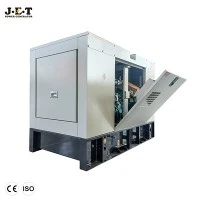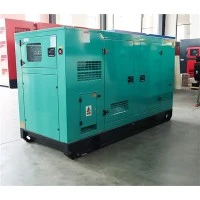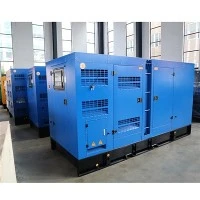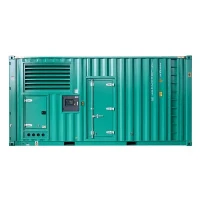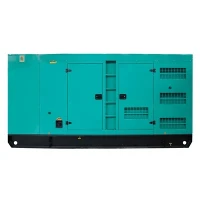

Large diesel generator sets are widely used in industrial facilities, data centers, commercial complexes, and major engineering projects where a dependable power supply is essential. Because these systems are typically high-output, heavy-duty machines with multiple supporting systems, installation quality has a direct impact on operational reliability. Careful planning and professional installation are therefore essential before the generator is commissioned.
The installation process begins with selecting a suitable location and preparing an appropriate foundation. The installation area must have adequate load-bearing capacity and sufficient space for operation, maintenance, ventilation, and equipment access. Once the foundation has been completed, its dimensions, levelness, and structural strength should be checked against the generator manufacturer's requirements. Appropriate vibration isolation may also be incorporated when required by the equipment design.
Transporting and positioning the generator requires particular attention because of its substantial weight. Suitable lifting equipment should be used, and lifting operations should follow the manufacturer's designated lifting points. Care must be taken to avoid damaging the engine, alternator, control cabinet, or other sensitive components. After positioning, the generator should be properly aligned, leveled, and securely anchored.
Ventilation and exhaust systems are essential to maintaining a suitable operating environment. A diesel engine produces considerable heat and exhaust gases during operation, so the generator room must provide adequate fresh-air intake and effective hot-air removal. The exhaust system should be installed according to the manufacturer's specifications, with appropriate thermal insulation where necessary. Exhaust gases must be safely discharged outside the building without creating excessive heat or ventilation problems.
The fuel system must also be installed with careful attention to reliability and safety. Fuel storage, supply, filtration, and piping should be appropriately configured for the generator's operating requirements. After installation, all connections should be inspected for proper sealing to reduce the risk of fuel leakage.
Electrical installation includes the connection of power cables, control wiring, grounding conductors, and distribution equipment. All connections should comply with the equipment specifications and the project's electrical design. Where automatic transfer between utility power and generator power is required, the appropriate transfer equipment should be installed and tested as part of the overall system.
Commissioning should be performed after the installation has been completed. The generator can first be checked under no-load conditions before progressing to load testing. Important operating parameters, including output voltage, frequency, oil pressure, coolant temperature, vibration, and exhaust conditions, should be monitored throughout the testing process. Protective and alarm functions should also be verified before the generator enters normal service.
Overall, installing a large diesel generator set is a comprehensive project involving mechanical, electrical, ventilation, exhaust, and fuel systems. Proper planning, professional installation, and thorough commissioning can provide a solid foundation for safe, stable, and reliable generator operation.